USD
 INR

Call Us Now
+91 9106756572
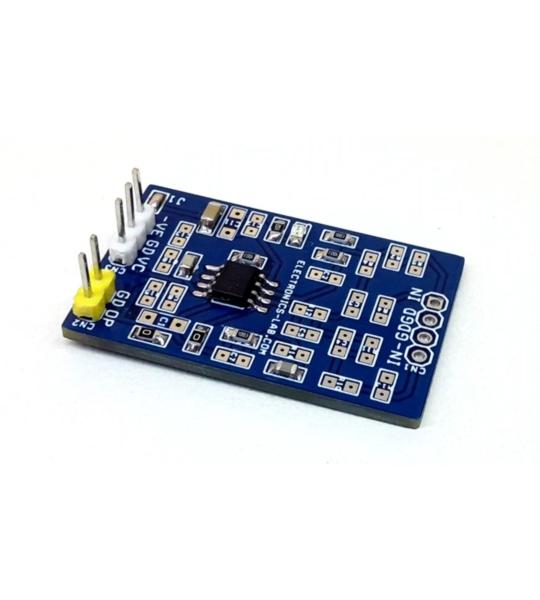
This is easy to build and very useful project for hobbyists and students to learn and create OPAMP-based projects. The project accommodates a single op-amp in a SOIC-8 package. The project provides the user with multiple choices and extensive flexibility for different applications circuits and configurations. It provides the user with many combinations for various circuit types including active filters, differential amplifiers, external frequency compensation circuits etc. A few examples of application circuits are given below. LM358 op-amp is the right choice to use but any SOIC8 OPAMP with the same pin configuration can be used. It supports dual supply or single supply, Jumper J1 is provided to use this board with a single supply, D1 is the power LED.
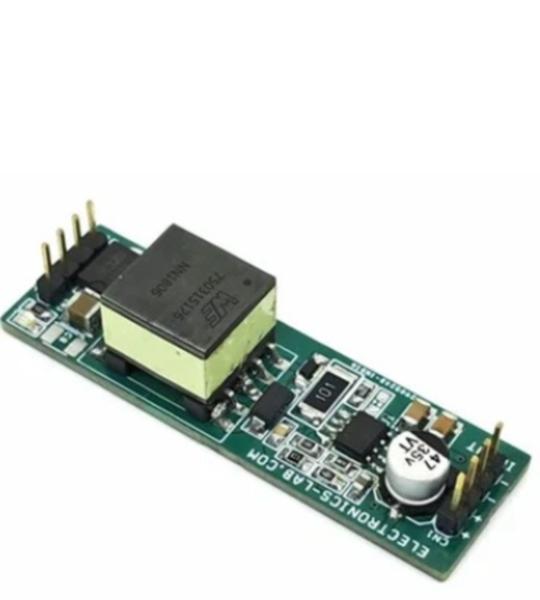
The project presented here is a micropower no-opto isolated flyback converter featuring the LT8304 chip from Analog Devices. This circuit outputs 12V and maintains tight regulation with a load current from 10mA up to 1A and over an input voltage from 18V to 28V. The project needs less than 0.5% of its full output power as a minimum load to maintain good output voltage regulation. The transformer leakage inductance causes a voltage spike on the primary side after the power switch turns off. To limit this leakage inductance spike within the MOSFET voltage rating of 150V, an RC snubber, and a TVS clamp are installed to dampen the ringing and clamp the MOSFET drain voltage to a safe level.
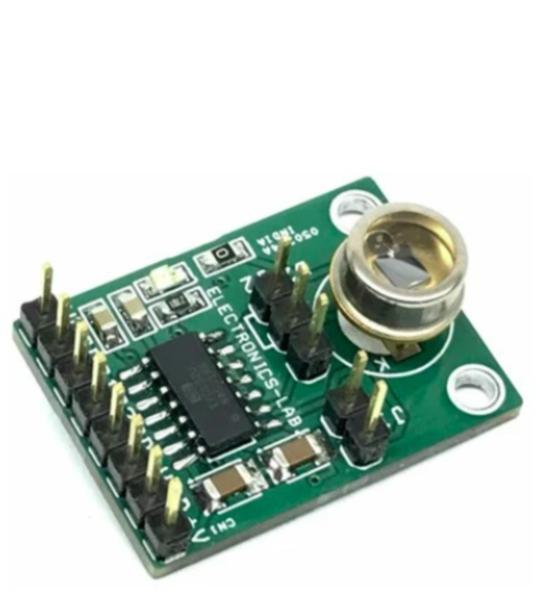
Module is based on IVC102 chip from Texas Instruments. This chip is a precision integrating amplifier with FET OPAMP, integrating capacitors, and low leakage FET switches. It integrates low-level input current for a user-determined period, storing the resulting voltage on the integrating capacitor. The output voltage can be held for accurate measurement. The IVC102 provides a precision, lower-noise alternative to conventional transimpedance OPAMP circuits that require a very high-value feedback resistor. The project is ideal for amplifying low-level sensor currents from photodiodes and ionization chambers. The input signal current can be positive or negative. TTL/CMOS-compatible timing inputs control the integration period, hold, and reset functions to set the effective transimpedance gain and reset (discharge) the integrator capacitor. Jumpers are provided to configure the circuit for photodiode amplifier or ionization chamber measurement.
Cookie preferences