USD
 INR

Call Us Now
+91 9106756572
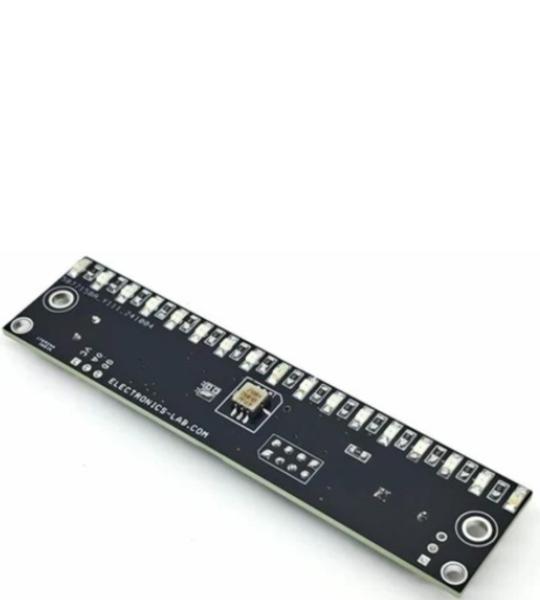
This project is an inclinometer based on the ADXL203/ADXL103 accelerometer chip and the Arduino microcontroller ATMEGA328. The device measures tilt and displays it on a 17-segment bar graph display. The ADXL203 provides an analog value, which is read by the ATMEGA328’s ADC A0 and displayed on the LED bar graph. The project also includes an optional on-board buzzer and driver circuit, which can be used to create an alarm at a certain degree of tilt. This feature is not populated on the board by default but can be added if required. On-board solder jumpers J1 and J2 are provided to select the X-Axis or Y-Axis of the ADXL chip since the chip has 2 axes. Users may additionally use single-axis chip ADXL103 instead of ADXL203 dual axis.
This precision thermocouple sensor module performs cold-junction compensation and digitizes the signal from any type of thermocouple. The output data is formatted in degrees Celsius. The converter resolves temperatures to 0.0078125°C, allows readings as high as +1800°C and as low as -210°C (depending on thermocouple type), and exhibits thermocouple voltage measurement accuracy of ±0.15%. The thermocouple inputs are protected against overvoltage conditions up to ±45V. A lookup table (LUT) stores linearity correction data for several types of thermocouples (K, J, N, R, S, T, E, and B). Line frequency filtering of 50Hz and 60Hz is included, as well as thermocouple fault detection. An SPI-compatible interface allows the selection of thermocouple type and setup of the conversion and fault detection processes. The operating supply of the project is 5V and it consumes a very low current. The module communicates over the SPI interface.
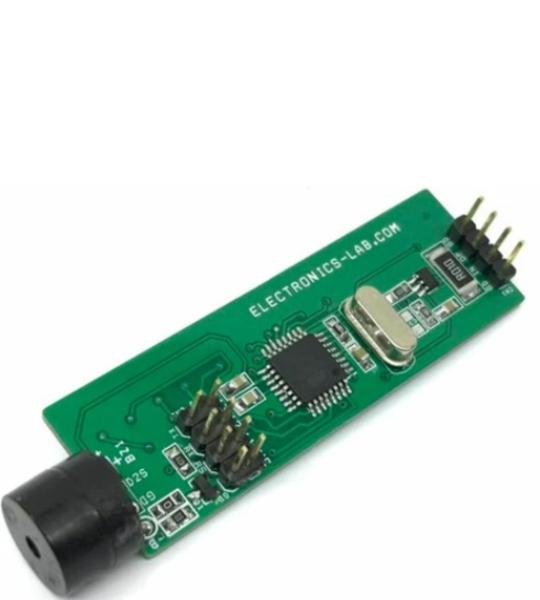
This Bar-Graph Display provides a high visibility 15-Segment Bar-Graph display for current measurements. A buzzer provides audible sound when an over-current condition event occurs. The 15 segments are made with Red, Blue, Green, and yellow color LEDS. All LEDs are SMD size 1206. This tiny board can display 0 to 2A current and provide an Alarm sound when the current level goes more than 2A. The project is Arduino-compatible and is based on an ATMEGA328 chip. INA198 chip measures the load current across the shunt resistor and provides an output voltage to ADC of ATMEGA328. The microcontroller drives and controls the 15 LEDs connected to I/O lines.
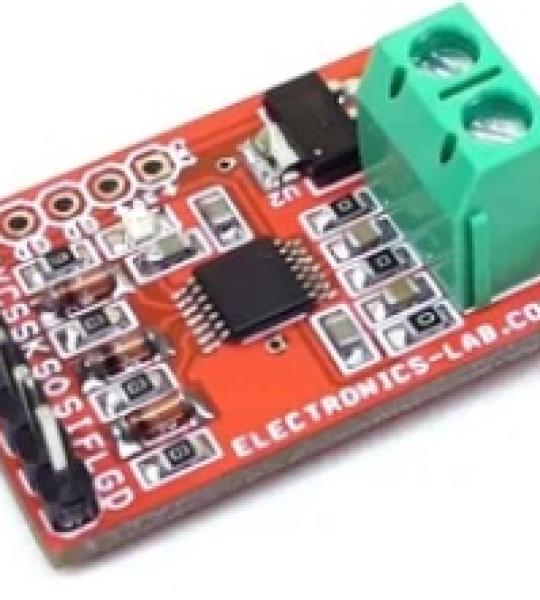
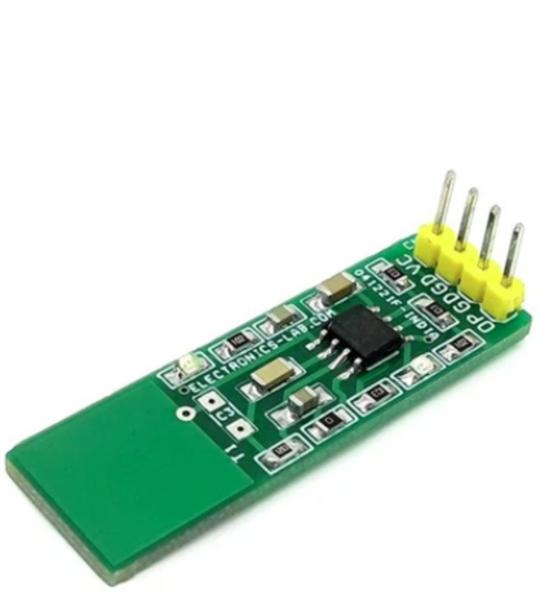
This is a single key device featuring a touch ON (Momentary) output. The project is built using the LM2907 chip. The board provides stable sensing and has a wide working power supply range 5V to 12V DC and consumes 20mA. D1 power LED, D2 function LED.
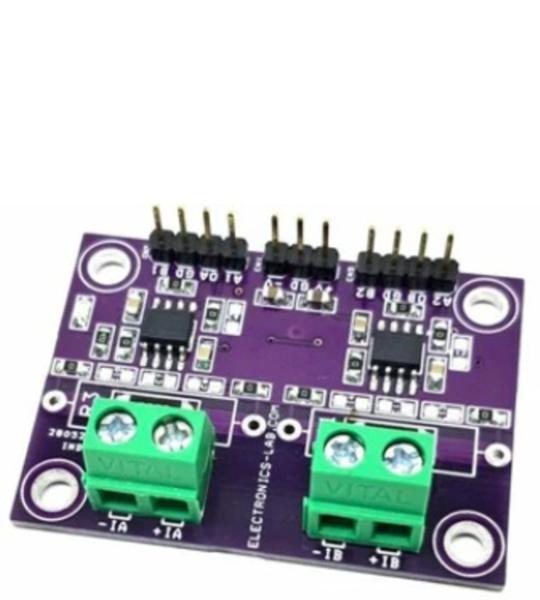
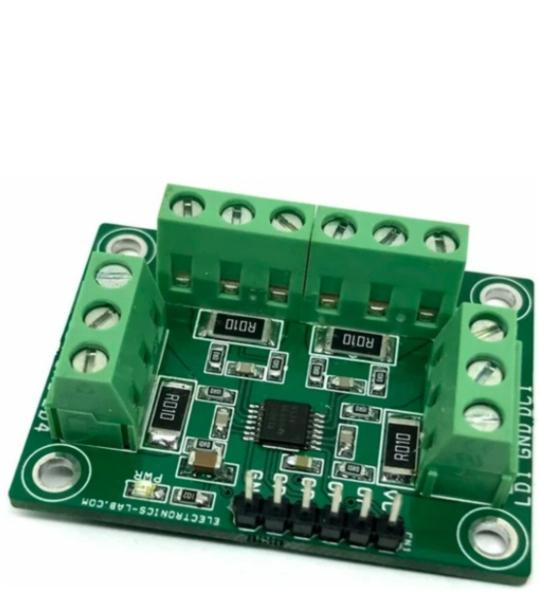
This board is built using a 2 x INA149 precision unity-gain difference amplifier with a very high input common-mode voltage range. The project can be used as a current sensor for high-voltage applications, INA149 provides a common-mode voltage range of +/-275V. The project operates with a wide supply range from +/-5V to +/-15V. The circuit measures current by sensing the voltage drop across a series of resistors RS, R4, and R12. The application circuit shows the INA149 used to measure the supply currents of a device under test. The sense resistor imbalances the input resistor matching of the INA149, thus degrading its CMR. Also, the input impedance of the INA149 loads RS, causes a gain error in the voltage-to-current conversion. Both of these errors can be easily corrected.
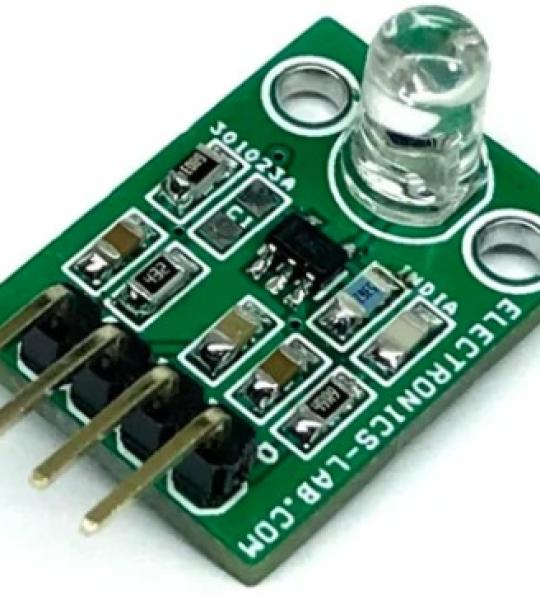
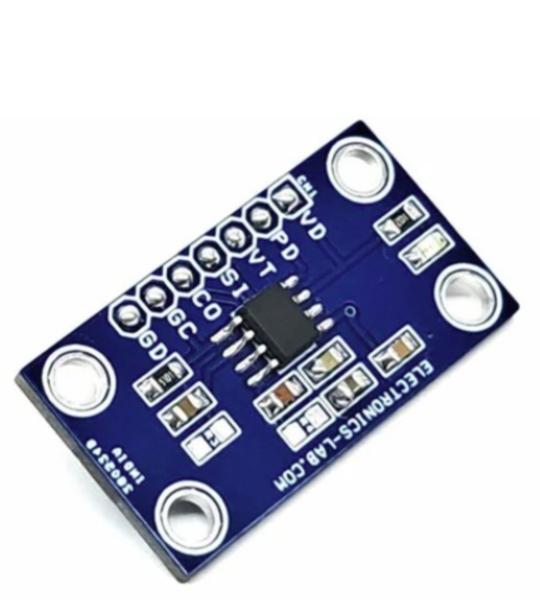
This small module is a photodiode amplifier. The circuit consists of an OPAMP configured as a transimpedance amplifier for amplifying the light-dependent current of the photodiode. A small bias voltage is derived from the positive supply and applied to the op amp’s non-inverting input. This prevents the output from saturating at the negative supply rail in the absence of input current. For this design, the photodiode operates in photoconductive mode: exposure to light will cause a reverse current through the photodiode. The diode is connected such that this current causes the OPAMP output voltage to increase. The feedback capacitor C5 helps to maintain stability. This capacitor compensates for the photodiode capacitance at the inverting input of the OPAMP. Finally, in the absence of any photodiode current, the amplifier output will attempt to settle at the voltage applied to the non-inverting input. If the non-inverting input is grounded, the output voltage would ideally be 0V. However, the output voltage can never reach 0V because this is also the value of the negative power supply. Therefore, the OPAMP output will “saturate” near its negative power supply. This condition is undesirable and can delay the amplifier’s response to an input signal. To avoid saturation, a resistor divider R1 and R2 from the positive supply is used to bias the amplifier input above ground. The output swing of this amplifier is from 0.1V to 4.9V. The project was built using OPA320 OPAMP which is a new generation of precision, low-voltage CMOS operational amplifiers optimized for very low noise and wide bandwidth while operating on a low quiescent current of only 1.45 mA.
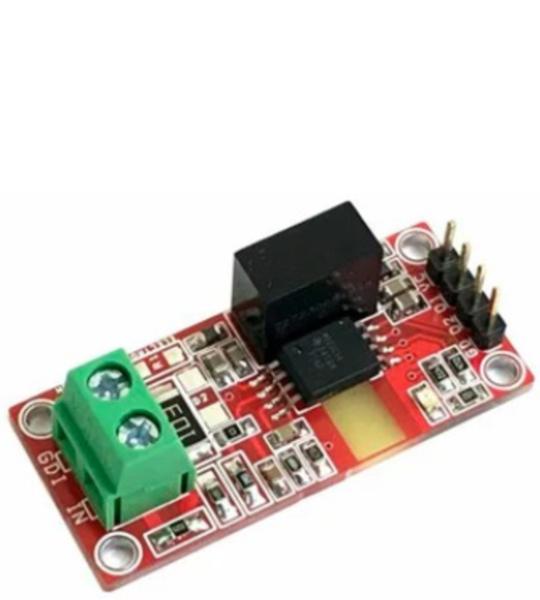
This high-speed, isolated Undervoltage and Overvoltage detection project is implemented with a dual isolated window comparator with an adjustable threshold (AMC23C14). This circuit is designed for industrial field-supply applications where the controller side must detect whether the remote module supply voltage is in a valid range.
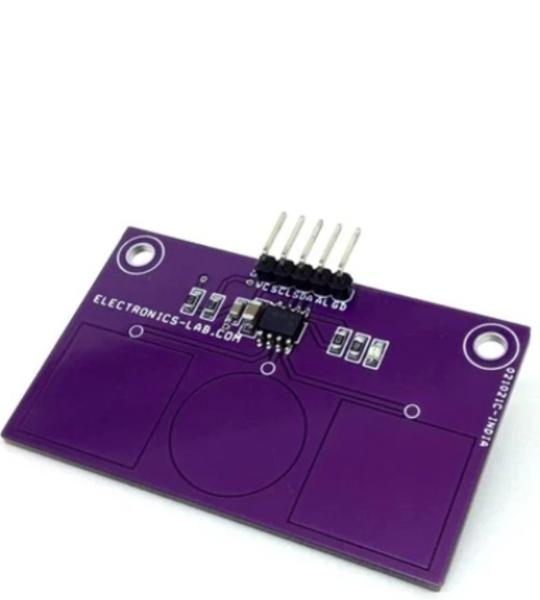
The project described here is a 3 channel capacitive touch sensor based on CAP1203 chip from Microchip which is a multiple-channel capacitive touch sensor controller. It has 3 x individual capacitive touch sensor inputs with programmable sensitivity for use in touch sensor applications. 3 x touchpads are provided on PCB to detect the touch. Each sensor input is calibrated to compensate for system parasitic capacitance and automatically recalibrated to compensate for gradual environmental changes. The CAP1203 includes Multiple Pattern Touch recognition that allows the user to select a specific set of buttons to be touched simultaneously. If this pattern is detected, a status bit is set and an interrupt is generated. The CAP1203 has Active and Standby states, each with its own sensor input configuration controls. Power consumption in the Standby state is dependent on the number of sensor inputs enabled as well as averaging, sampling time, and cycle time. Deep Sleep is the lowest power state available, drawing 5µA (typical) of current. In this state, no sensor inputs are active, and communications will wake the device.
This angle sensor module features an ADA4571 chip, an anisotropic magneto resistive (AMR) sensor with integrated signal conditioning amplifiers and ADC drivers. The circuit produces two analog outputs that indicate the angular position of the surrounding magnetic field.
This 4-Channel current sense amplifier is designed for cost-optimized applications. This is a current-sense amplifier (also called a current-shunt monitor) that senses the voltage drop across current-sense resistors at common-mode voltages from –0.2 V to +26 V, independent of the supply voltage. The project was built using INA4180 chip which integrates a matched resistor gain network in four, fixed-gain 20V/V, this matched gain resistor network minimizes gain error and reduces the temperature drift. The board operates with a single 2.7-V to 5.5-V power supply. The four-channel INA4180 draws a maximum supply current of 900 µA. Resistors R2, R6, R8, R12, R3, R7, R9, R13 and Capacitor C3, C4, C5, C6 used as input filters. The gain of the amplifier is 20V/V, and external input resistors resulting a 0.9% gain error.
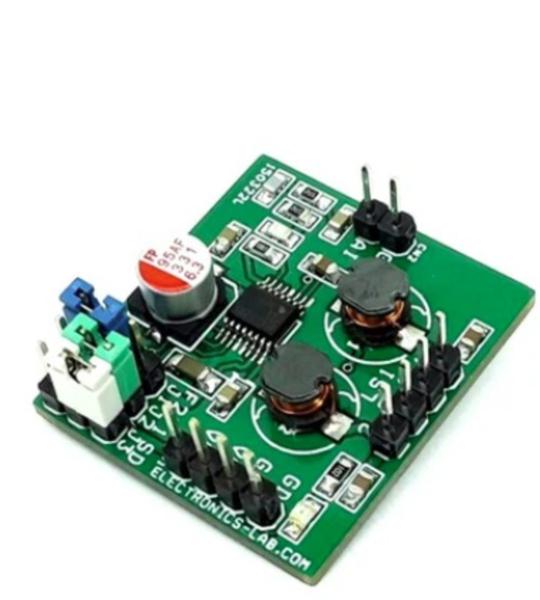
This is a compact size, mono, switch-mode (Class-D) audio power amplifier intended for multimedia and general-purpose high-power applications. It has greater than 87% efficiency and is capable of delivering 2W maximum continuous power to a 4Ω load. The project is designed to be driven by the line-out or headphone jack of a CD/MP3 player or to be directly connected to any audio source. The project includes header connectors for speakers, power supply, and audio input for quick connection. The project also has 3x jumpers for frequency selection and shutdown action. The project is built using the MAX4295 chip.
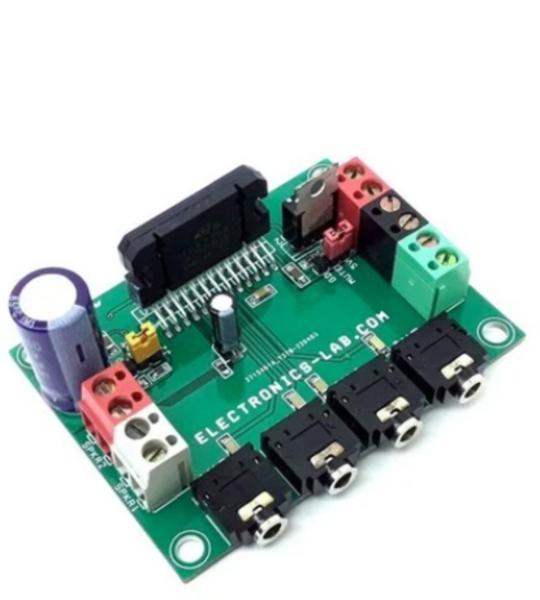
This is an AB class audio amplifier based on the TDA7388 chip and it is a great choice for car audio applications. This compact board has 4 channels each 26W with 4 ohms speaker. Then IC consists of a fully complementary PNP/NPN configuration and the TDA7388 allows a rail-to-rail output voltage swing with no need for bootstrap capacitors. The extremely reduced boundary components count allows very compact sets. The TDA7388’s inputs are ground-compatible and can stand very high input signals (±8 Vpk) without any performance degradation. The standard value for the input capacitors (0.1 µF) is adopted, and the low-frequency cut-off amount to 16 Hz. 4 x 3.5 mm stereo EP socket helps to feed audio signals, and the onboard screw terminal makes life easy for speaker connections, and the power supply input. Onboard jumpers are provided to select the standby and mute function. D1 indicates power present. Mounting a proper heatsink is very important for chip health.
Cookie preferences